Product Center
Cone Crusher
Crushing Equipment
PE Jaw Crusher
PEW Jaw Crusher
CZC Jaw Crusher
PFW Impact Crusher
PF Impact Crusher
PFS Strong Impact Crusher
VSI Vertical Shaft Impact Crush
VSI5X High-Efficiency Impact Crusher
PC Hammer Crusher
PG Roller Crusher
Diesel Engine Crusher
PFL Vertical Compound Crusher
Crushing Plant
Auxiliary Equipment
Soil and Stone Separator
GZD Vibrating Feeder
YZS Circular Vibrating Screen
SZF Linear Vibrating Screen
XSD Sand Washer
XL Sand Washer
XT Drum Stone Washer
Belt Conveyor
Grinding Equipment
High-Pressure Suspension Mill
MTW European Type Grinding Mill
CZM Ring Roller Micro Powder Mill
Raymond Mill
LM Vertical Mill
Ball Mill
Live Chat
Have question? Sales representatives
are available for live chat now.

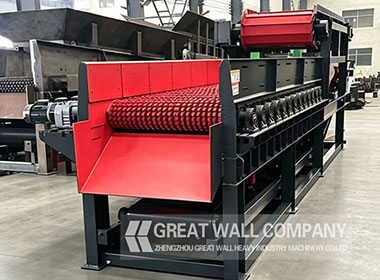
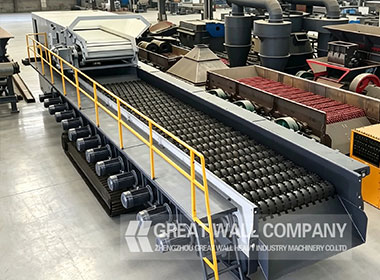
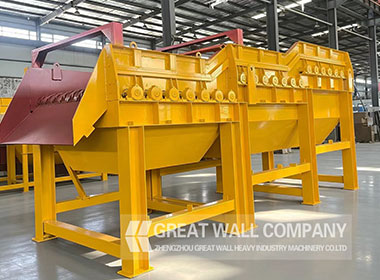
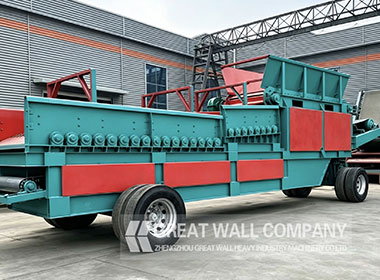
Soil and Stone Separator
Soil and stone separator is mainly used for separating and screening small particles such as mud and soil in materials such as soil and stone mixtures, mud and stone mixtures, and construction waste. Utilizing a multi-stage roller screening structure, it overcomes common issues associated with traditional screens, such as clogging caused by wet materials, material adhesion, and incomplete separation.
Tel: 0086-371-63769782
sales@greatwallcrusher.com
- Brief Introduction
- Working Principle
- Main Specifications
- Application Site
Usage and Application
Soil and stone separator is mainly used for separating and screening small particles such as mud and soil in materials such as soil and stone mixtures, mud and stone mixtures, and construction waste. Utilizing a multi-stage roller screening structure, it overcomes common issues associated with traditional screens, such as clogging caused by wet materials, material adhesion, and incomplete separation. It is widely used in industries including mining, sand and aggregate production, river dredging, earthworks, and construction waste processing.
Features
1. Employs a dynamic roller-wave screening principle with a non-fixed aperture structure; this thoroughly eliminates clogging caused by wet or sticky materials, delivering excellent screening results for high-moisture, high-viscosity mixtures with a near-zero clogging rate.
2. Continuous agitation and breakup of material by the screening discs ensure thorough separation of soil from stone, resulting in very low soil content in the stone product; this effectively improves aggregate quality and significantly boosts raw material utilization.
3. Material flows smoothly across the screening surface with no dead zones; processing efficiency for wet materials is over 40% higher than that of vibrating screens, and the high throughput allows a single unit to support large-scale, continuous production lines.
4. Features a low-speed rolling screening design that avoids high-speed vibration impacts, resulting in minimal component wear, a simple yet durable structure, stable operation, and a low failure rate.
5. Capable of processing various dry, wet, and sticky mud-stone mixtures; highly adaptable to diverse working conditions and unaffected by material moisture content.
6. The equipment is resistant to material clogging or jamming, eliminating the need for frequent shutdowns to clear blockages; the screen discs offer a long service life and are easy to replace and maintain, significantly reducing labor and maintenance costs.
Soil and stone separator is mainly used for separating and screening small particles such as mud and soil in materials such as soil and stone mixtures, mud and stone mixtures, and construction waste. Utilizing a multi-stage roller screening structure, it overcomes common issues associated with traditional screens, such as clogging caused by wet materials, material adhesion, and incomplete separation. It is widely used in industries including mining, sand and aggregate production, river dredging, earthworks, and construction waste processing.
Features
1. Employs a dynamic roller-wave screening principle with a non-fixed aperture structure; this thoroughly eliminates clogging caused by wet or sticky materials, delivering excellent screening results for high-moisture, high-viscosity mixtures with a near-zero clogging rate.
2. Continuous agitation and breakup of material by the screening discs ensure thorough separation of soil from stone, resulting in very low soil content in the stone product; this effectively improves aggregate quality and significantly boosts raw material utilization.
3. Material flows smoothly across the screening surface with no dead zones; processing efficiency for wet materials is over 40% higher than that of vibrating screens, and the high throughput allows a single unit to support large-scale, continuous production lines.
4. Features a low-speed rolling screening design that avoids high-speed vibration impacts, resulting in minimal component wear, a simple yet durable structure, stable operation, and a low failure rate.
5. Capable of processing various dry, wet, and sticky mud-stone mixtures; highly adaptable to diverse working conditions and unaffected by material moisture content.
6. The equipment is resistant to material clogging or jamming, eliminating the need for frequent shutdowns to clear blockages; the screen discs offer a long service life and are easy to replace and maintain, significantly reducing labor and maintenance costs.
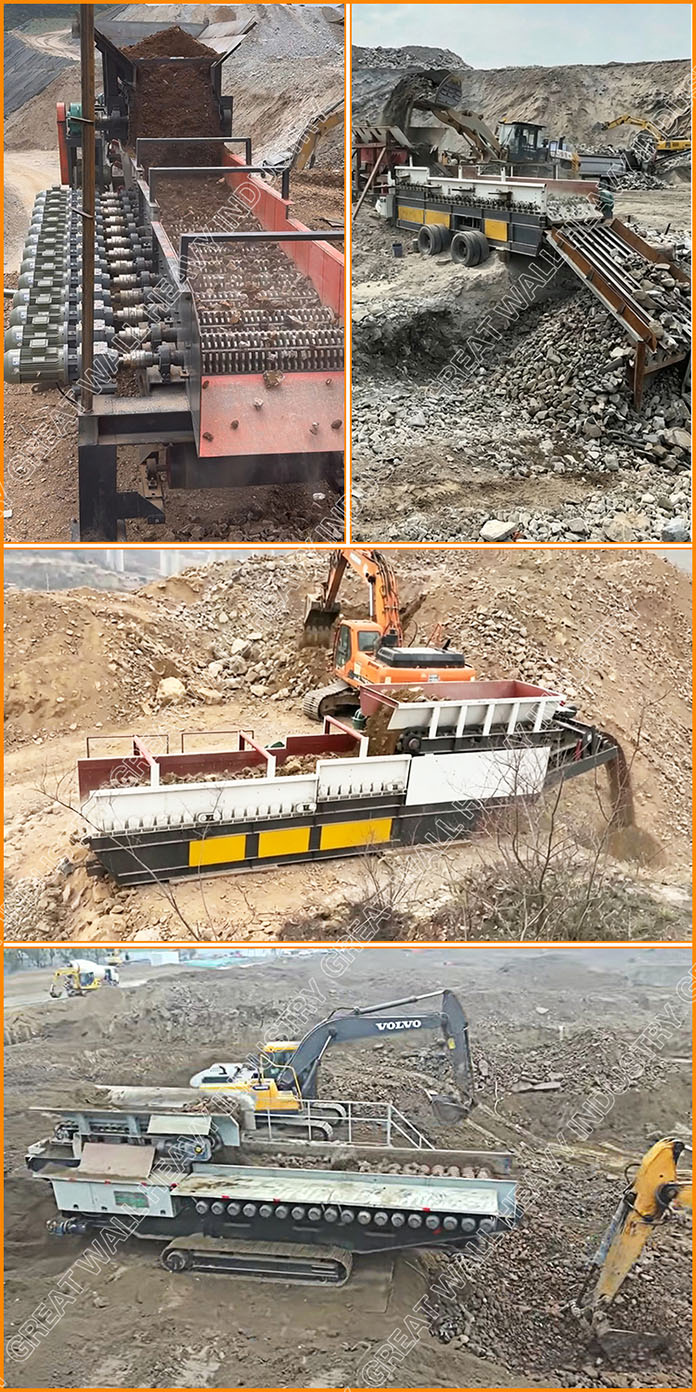
During operation, the motor drives multiple rollers to rotate via a gearbox and coupling (or chain drive). Material is evenly fed onto the screening surface at the inlet. As the rollers rotate, the screening discs mounted on them continuously agitate, break up, and convey the material. Fine particles like mud and soil are detached from larger pieces and fall rapidly through the gaps between the discs onto a bottom conveyor belt for discharge, while larger materials are tumbled forward by the discs toward the discharge end, completing the separation process.
Processing capacity: 50–1600 t/h
Feeding particle size: ≤600 mm
Screening gap: 10–120 mm
Number of rollers: 6–24
Operation mode: Variable frequency speed control, synchronous operation
Note: The equipment is customized based on customer requirements and material characteristics.
Feeding particle size: ≤600 mm
Screening gap: 10–120 mm
Number of rollers: 6–24
Operation mode: Variable frequency speed control, synchronous operation
Note: The equipment is customized based on customer requirements and material characteristics.
RELATED PRODUCTS